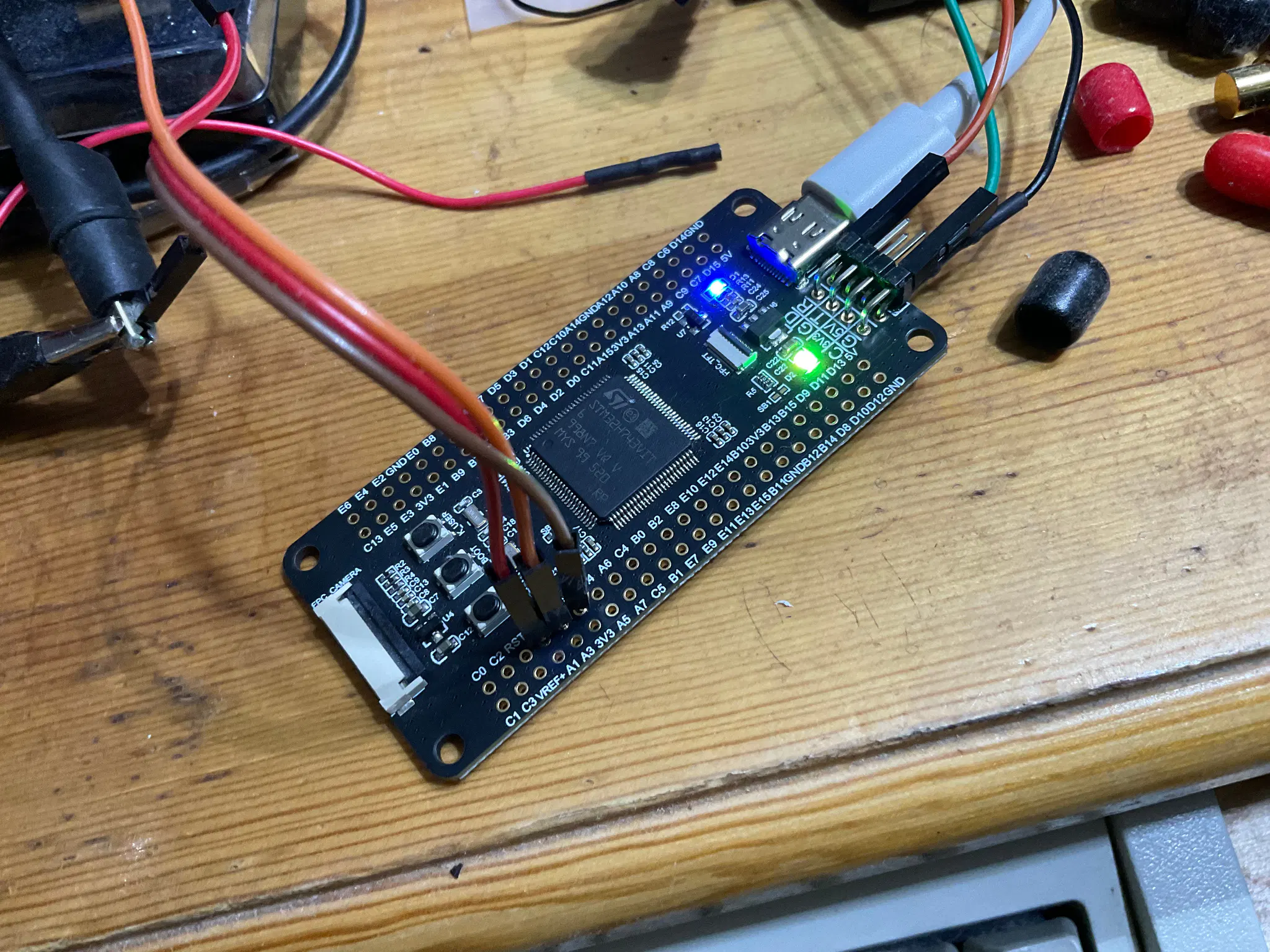
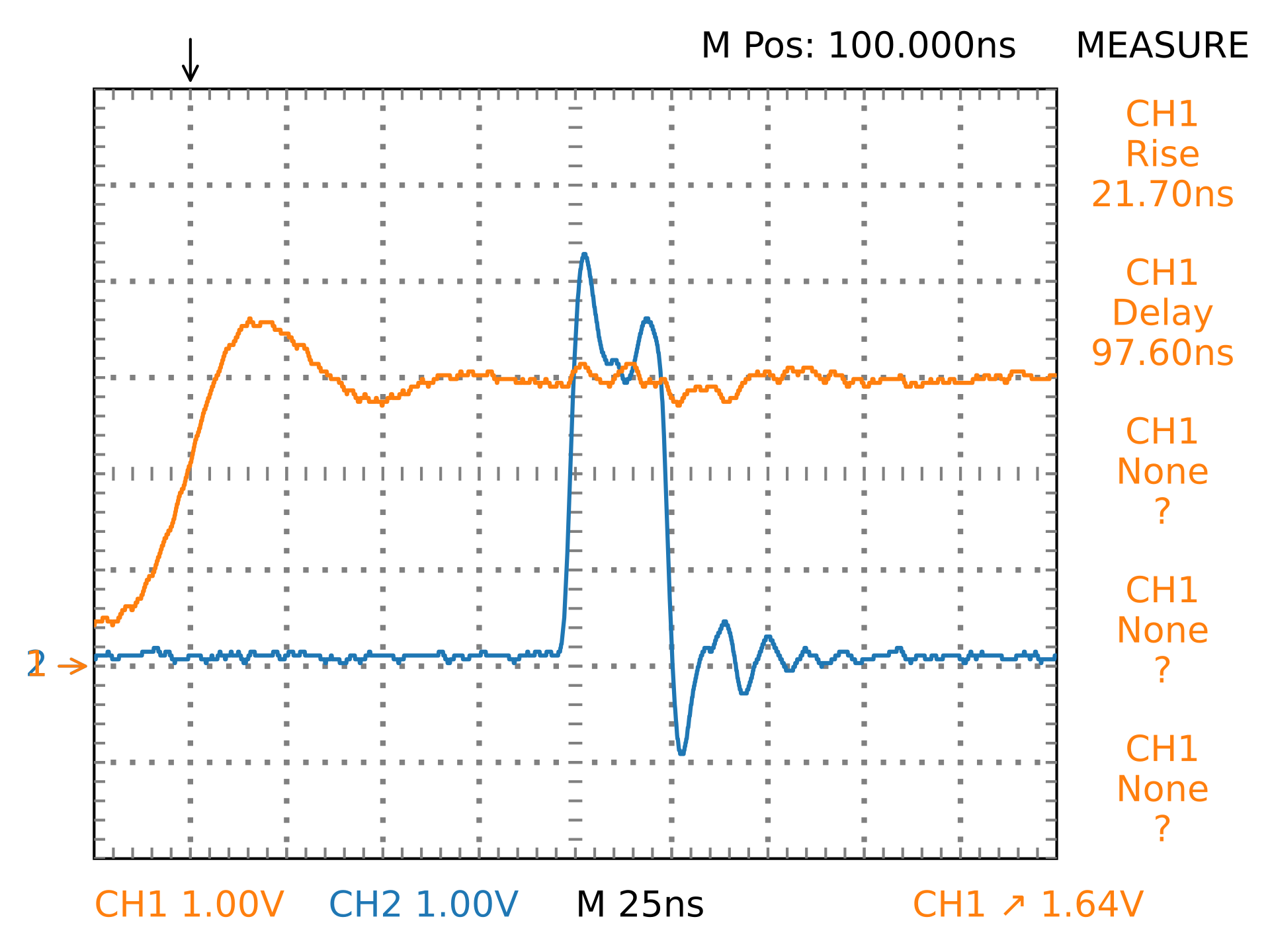
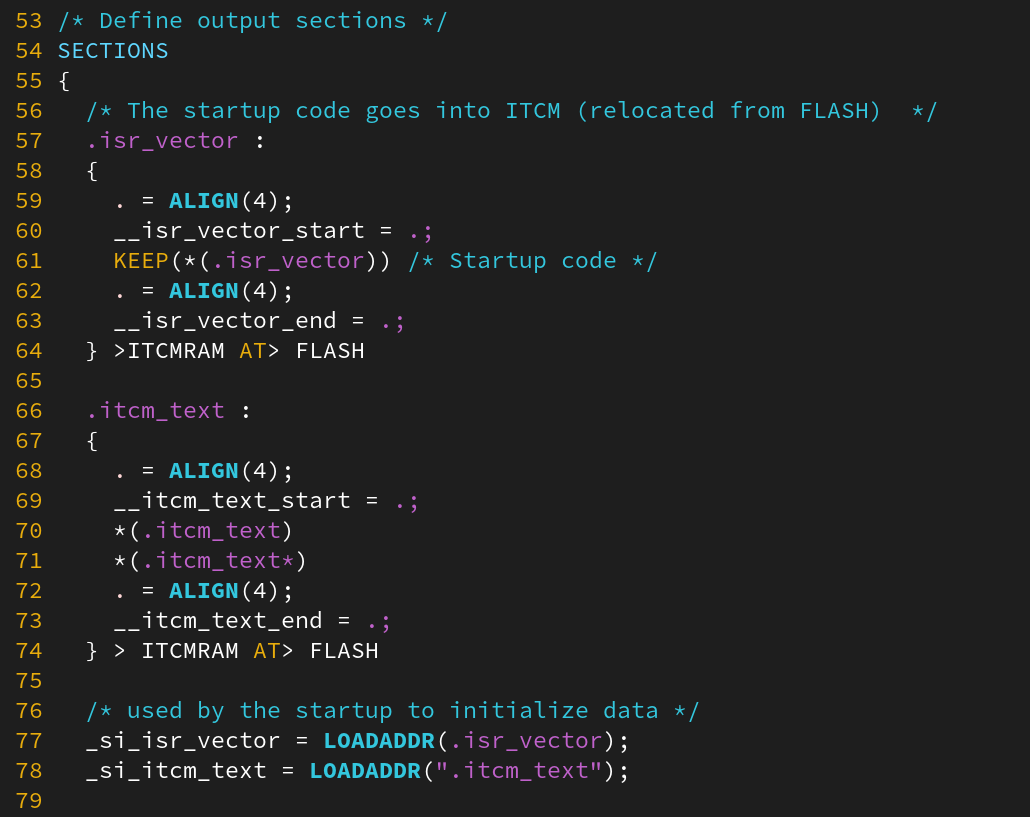
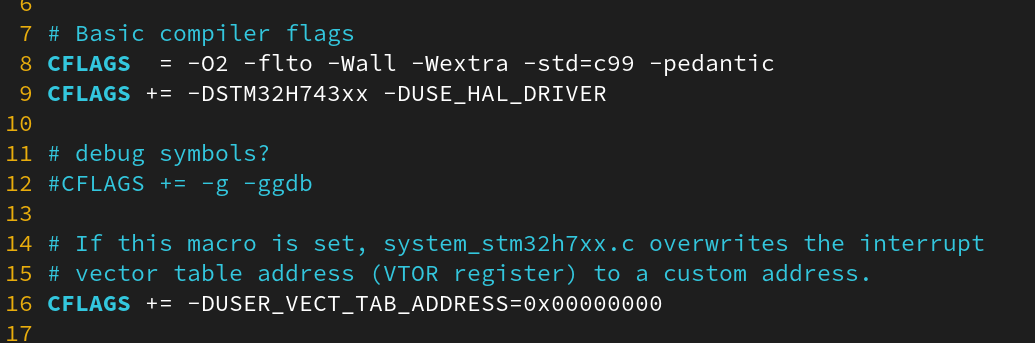
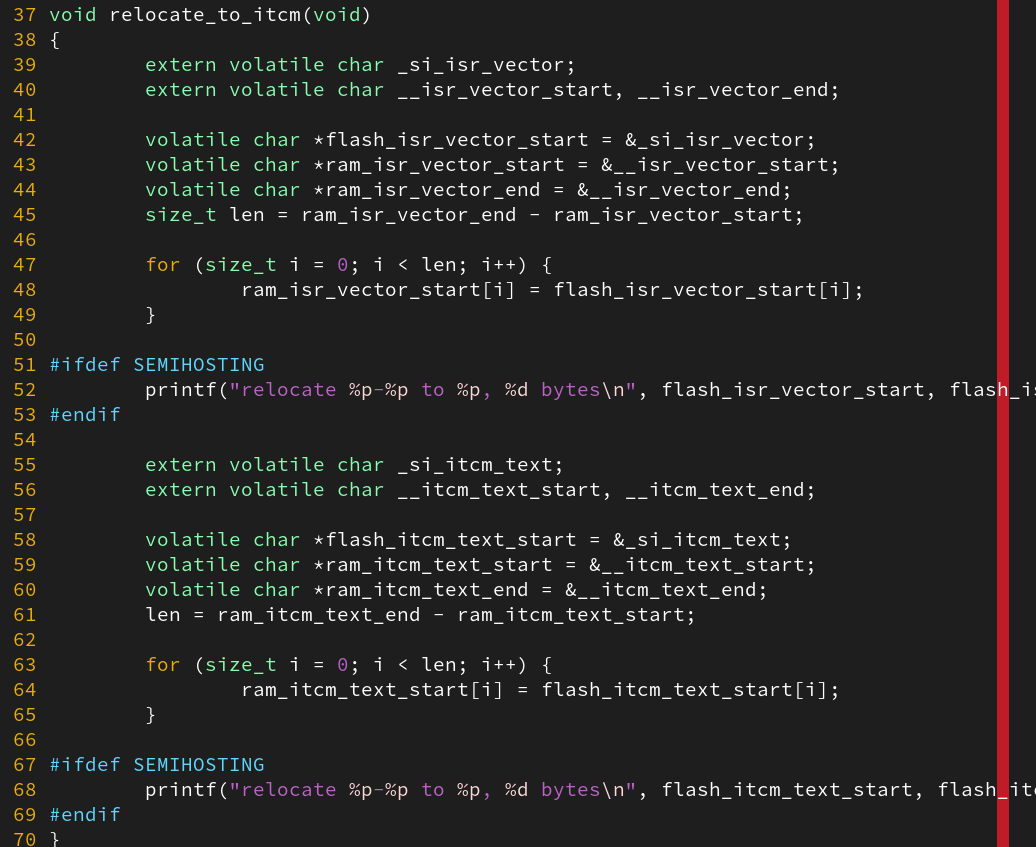
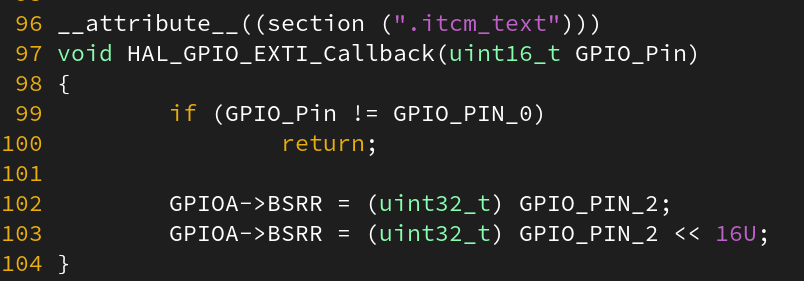
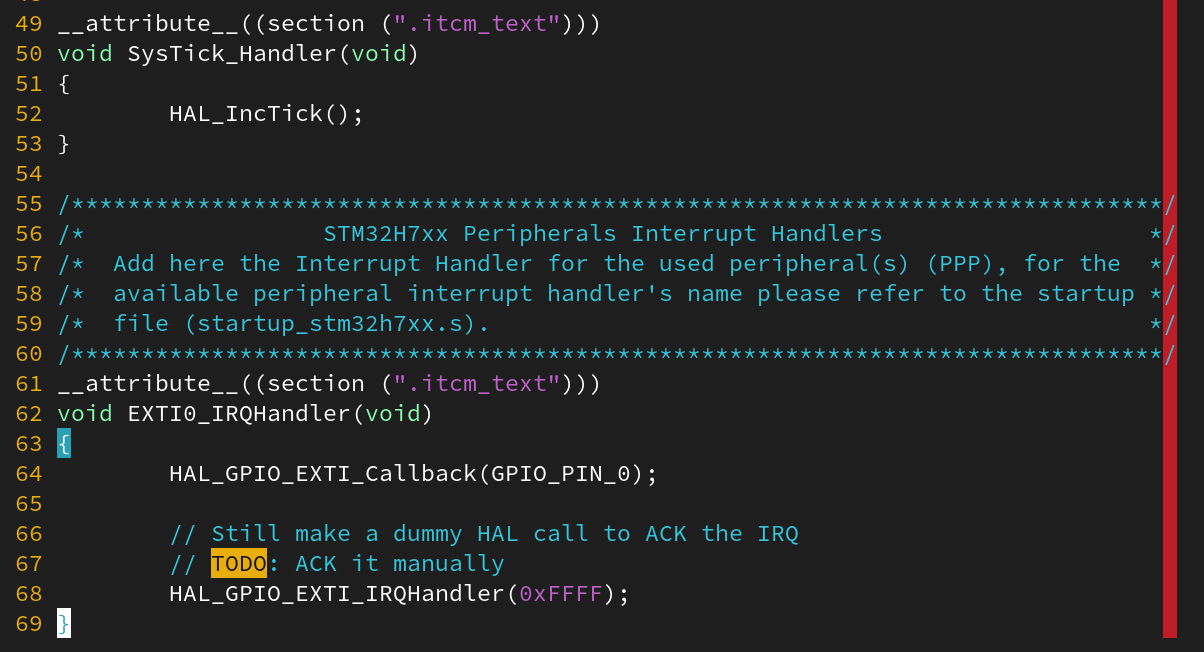
Optimizing IRQ latency on the STM32H743 @ 480 MHz, perhaps for NES ROM emulation...
-
"Warn : no flash bank found for address 0x08100000"
Spent half an hour trying to figure out why can't OpenOCD see my upper flash bank, while claiming my STM32 is dual-banked at the same time. Solution: usestm32h7x_dual_bank.cfg, notstm32h7x.cfg. #electronics #STM32
Still working on the same 60-pin Famicom cartridge emulator devboard. Finding a single-layer solution for the 480 MHz STM32H7 on a 2-layer power+signal / GND only stackup is like kicking a dead whale down the beach. I should've used a 4-layer board, but at least I now have the bragging right of developing the least radiative 2-layer PCB for the NES. #electronics #NES #NESdev
-
Still working on the same 60-pin Famicom cartridge emulator devboard. Finding a single-layer solution for the 480 MHz STM32H7 on a 2-layer power+signal / GND only stackup is like kicking a dead whale down the beach. I should've used a 4-layer board, but at least I now have the bragging right of developing the least radiative 2-layer PCB for the NES. #electronics #NES #NESdev
-
Still working on the same 60-pin Famicom cartridge emulator devboard. #electronics #NES #NESdev
EMC Pro Tip: rejoin the GND later nearby if you must split it, so the loop area doesn't go off the chart. P.S: I think a ground pour with vias should work even better here, as the signal traces would form coplanar waveguides with well-defined reference planes on the same layer. #electronics #NES #NESdev
-
EMC Pro Tip: rejoin the GND later nearby if you must split it, so the loop area doesn't go off the chart. P.S: I think a ground pour with vias should work even better here, as the signal traces would form coplanar waveguides with well-defined reference planes on the same layer. #electronics #NES #NESdev
The holy grail of 2-layer PCB is when you have just a metal sheet on layer 2. I think I'm quite close, but unfortunately some external jumpers are needed to finish the remaining control lines without cutting this beautiful plane. Even THT resistor jumpers are not enough to jump across the 24-trace bus. #electronics #NES #NESdev
-
The holy grail of 2-layer PCB is when you have just a metal sheet on layer 2. I think I'm quite close, but unfortunately some external jumpers are needed to finish the remaining control lines without cutting this beautiful plane. Even THT resistor jumpers are not enough to jump across the 24-trace bus. #electronics #NES #NESdev
NES quirk: the VRAM has two memory layouts that "wraps back" either horizontally or vertically for different scrolling games. This is called "nametable mirroring" mode, controlled by routing the raw "CIRAM A10" signal to the PPU A10/A11 address line via the cartridge port. But for my cartridge emulator, it means we're not just acting as a device sitting on the bus, it's actively messing with the PPU bus on the whole machine. Do I have enough time to do it in software GPIO, or do I have to use an external 2:1 hardware mux? Let's see:
* Hitachi HM6116 - Read: address valid prior to or coincident with /CS low. Write: address setup time 20 ns.
* Panasonic MN4216 - Read: address valid prior to or coincident with /CS low. Write: address setup time 20 ns.
* Sony CXK5816PN: Write: address setup time 0 ns.
* Sanyo LC3517: Write: address setup time 0 ns.
Conclusion: don't worry about it, "copy an address bus line 20 ns before /CS falls" is not a significant timing constraint to the existing 180 ns budget for the emulator. #electronics #NES #NESdev -
NES quirk: the VRAM has two memory layouts that "wraps back" either horizontally or vertically for different scrolling games. This is called "nametable mirroring" mode, controlled by routing the raw "CIRAM A10" signal to the PPU A10/A11 address line via the cartridge port. But for my cartridge emulator, it means we're not just acting as a device sitting on the bus, it's actively messing with the PPU bus on the whole machine. Do I have enough time to do it in software GPIO, or do I have to use an external 2:1 hardware mux? Let's see:
* Hitachi HM6116 - Read: address valid prior to or coincident with /CS low. Write: address setup time 20 ns.
* Panasonic MN4216 - Read: address valid prior to or coincident with /CS low. Write: address setup time 20 ns.
* Sony CXK5816PN: Write: address setup time 0 ns.
* Sanyo LC3517: Write: address setup time 0 ns.
Conclusion: don't worry about it, "copy an address bus line 20 ns before /CS falls" is not a significant timing constraint to the existing 180 ns budget for the emulator. #electronics #NES #NESdev -
oof.
 #electronics #NES #NESdev
Downsized all input resistors from 1206 to 0603, preparing to use the extra space for more air bridges. I initially switched from 0603 to 1206 to give space for horizontal traces, but I found it did not really have any advantage in comparison to 0603, as the vertical traces blocked all the horizontal ways anyway, 0603 + selective 1206 jumpers probably can solve this deadlock. #electronics #NES #NESdev
-
Downsized all input resistors from 1206 to 0603, preparing to use the extra space for more air bridges. I initially switched from 0603 to 1206 to give space for horizontal traces, but I found it did not really have any advantage in comparison to 0603, as the vertical traces blocked all the horizontal ways anyway, 0603 + selective 1206 jumpers probably can solve this deadlock. #electronics #NES #NESdev
Unfortunately the original layout couldn't be completed because the placement and fan-out were not designed with "single-layer flowthrough" in mind, as I originally had no idea about the pinout. The whole board layout was thus abandoned and restarted. Now I have a 99% zero-gap ground plane, with only 13 non-perpendicular cuts under the connectors without interrupting GND. An army of 0-ohm jumpers bridge signals to human-friendly positions. #electronics #NES #NESdev
-
Unfortunately the original layout couldn't be completed because the placement and fan-out were not designed with "single-layer flowthrough" in mind, as I originally had no idea about the pinout. The whole board layout was thus abandoned and restarted. Now I have a 99% zero-gap ground plane, with only 13 non-perpendicular cuts under the connectors without interrupting GND. An army of 0-ohm jumpers bridge signals to human-friendly positions. #electronics #NES #NESdev
-
Almost finished my Famicom cartridge devboard. This time all signals fanned out successfully under the 2-layer + "Zero Gap" ground plane constraints. 100 MHz signal integrity disciplines applied to a 1 MHz bus. #electronics #NES #NESdev
@niconiconi@mk.absturztau.be I don't understand half of it and love it! Thanks for sharing